Why it matters
Supplies help when everyone is together at home, but emergencies often happen on an ordinary weekday when parents are at work and children are at school.
A household emergency plan takes about 20 minutes to put together.• Agreeing on where to meet, who to call and who picks up the children saves guesswork when phones are busy and everyone is under stress.
What the guidance says
The first few days
Contacts and an out-of-area contact
Write down:
- An out-of-area contact: a relative or friend in another city or province. Everyone in the family texts or calls that one person to check in.•
- Local contacts and next of kin: trusted relatives, neighbours and friends nearby.
- Service numbers: your family doctor, pharmacy, utilities, insurance and local non-emergency lines.
- Text before you call. It keeps lines clearer for 9-1-1.
Keep a printed copy of your plan in your home kit and in each grab-and-go bag, with a pen and paper.
Safe exits and two meeting places
Agree on these now, so nobody waits for a phone call to know where to go.•
| Place | Where to pick | When you use it |
|---|---|---|
| Safe exits from home | Two ways out of every room and floor, if possible | A house fire, smoke or a gas leak |
| Near-home meeting place | A clear spot just outside, such as a tree or a streetlamp | Meeting right after evacuating the home |
| Outside the neighbourhood | A library, masjid, community centre or friend’s home nearby | When your street or building is cordoned off |
Grab-and-go bags and your car kit
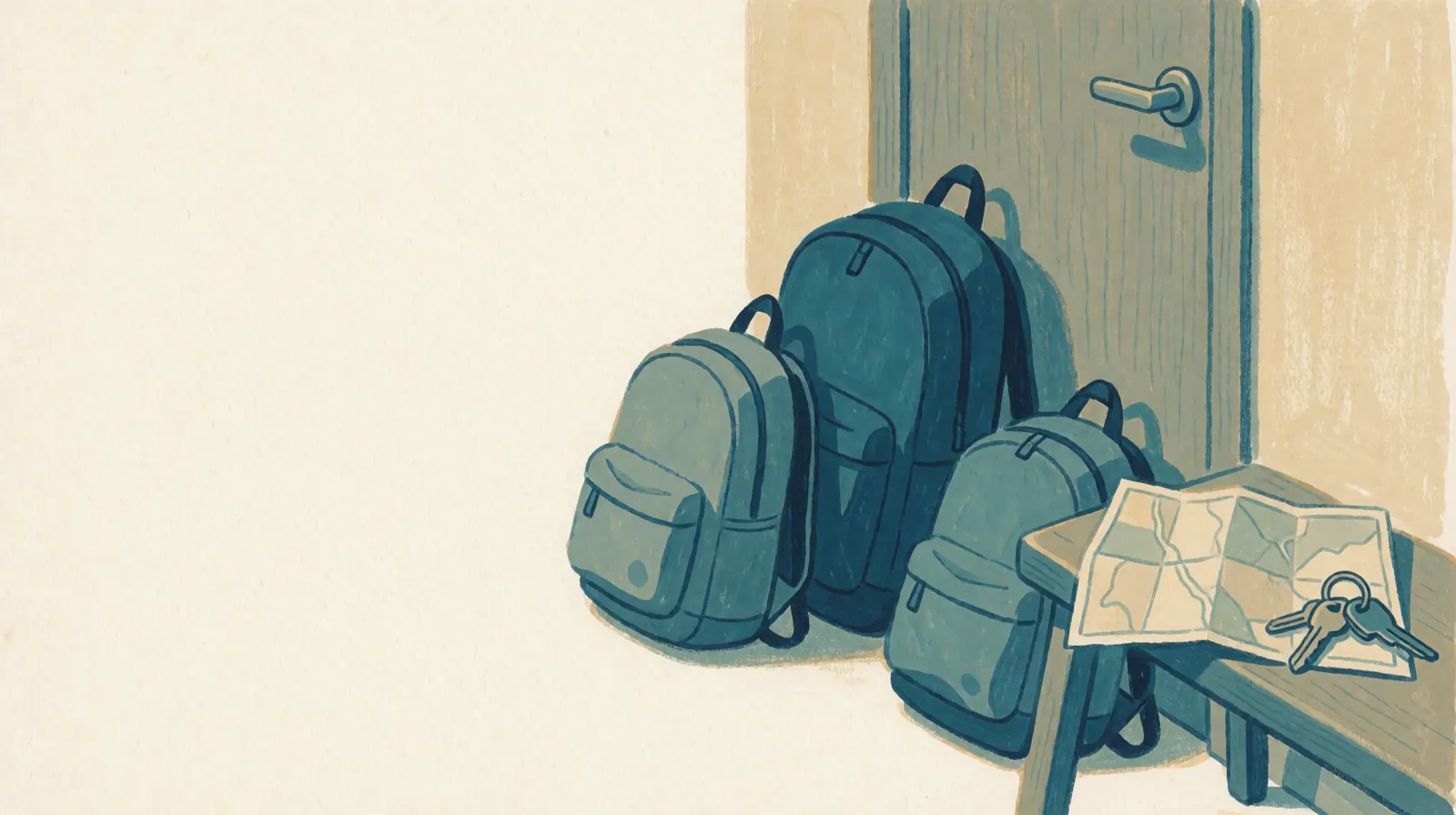
A grab-and-go bag is a backpack for each person, kept near the door in case you need to leave quickly.•
- Give each person a backpack they can carry on their own.
- Label each bag with the person’s name and your out-of-area contact number.
- Pack water, snacks, a flashlight, copies of IDs and the plan, a change of clothes, sturdy shoes and a blanket or sleeping bag.
- Add local paper maps, utensils and a small multi-tool, and a small pouch of activities for each child: cards, a puzzle book, crayons, a familiar toy.•
- Store the bags together near the front door.
A car kit, if you have a car.• Start with what you own: water, a blanket and a flashlight. A fuller kit adds food, warm clothes and boots, a first aid kit with a seatbelt cutter, a small shovel, scraper and snowbrush, a whistle, roadmaps and a copy of your plan. Replace the water every 6 months.
Twenty minutes around the table after dinner is enough to pick your two meeting places and your out-of-town contact.
Over the coming months
Children, school and childcare
Preparing children calmly helps them feel safer when something unusual happens.•
- Check your school or daycare’s emergency rules: how they contact parents, and where children go if the building is evacuated.
- Authorize a trusted pickup person on the school’s list, in case you’re delayed.
- Teach children when and how to call 9-1-1. Practise giving your address, saying what happened, and staying on the line until the dispatcher says to hang up. Make sure they know their address and a parent’s number by heart.
Elders, disability and mobility support
For older parents, or anyone with a disability or medical need:
- Build a support network of at least three trusted people nearby who can check in.•
- Share the details with them: where the kit is, how any medical or mobility equipment works, and a spare key.
- Plan an elevator-free exit if you live above the ground floor, and ask whether your building keeps an evacuation registry.
Pets
If you evacuate, bring your pet with you.• Reception centres often allow only service animals,• so plan ahead:
- Keep a pet kit and carrier ready: a leash and collar with ID tags, bowls, litter or bags, medications, recent photos, vaccination records, and at least 72 hours of food and water. Allow about 4 litres of water per day for an average dog and 1 litre per day for an average cat.•
- List pet-friendly places before you need them: relatives or friends, pet-friendly hotels and boarding kennels.
Utility shut-offs and your fire extinguisher
Walk through your home once and note in your family plan where each one is.•
- Water shut-off valve.
- Electrical panel, with the main breaker labelled.
- Gas valve. If you smell gas, leave the building immediately and call from outside. Only a technician turns the gas back on.
- Floor drain, kept clear so water can drain in a flood.
- Fire extinguisher, on the main floor near the kitchen. Check its pressure gauge when you test your alarms.
Walk through and review your plan
A plan works best when everyone has walked through it once in calm weather.• Practice your home exit routes with your children, and review your plan once a year so phone numbers, school details and pickup lists stay current.
For the long term
Neighbours and community
The people on your street or floor can reach you first. Build those ties before an emergency.•
- Get to know your neighbours, and keep a paper contact list for your street or floor.
- Know who may need a check-in: elders living alone, families with newborns, anyone with limited mobility.•
- Note who has what: first aid training, a ladder, a snowblower, a generator or extra space.
- Connect with your building group. Multi-unit buildings can appoint a volunteer floor captain.•
The workbook goes deeper.
Do this now
You don’t need to fill in every box tonight. Open the family plan form, write down your out-of-area contact and two meeting places, and build from there.
Sources (11)
- Make a plan, Government of Canada
- Emergency kit checklist, Government of Canada
- Car emergency kit, Government of Canada
- Prepare children for emergencies: tips for parents and caregivers, Government of Canada
- Emergency preparedness for persons with disabilities, Government of Canada
- Emergency preparedness for pets and service animals, Government of Canada
- Community resilience and risk reduction, Government of Canada
- Be prepared for an emergency, Government of Ontario
- Fire safety at home, Government of Ontario
- Before an emergency, City of Toronto
- During an emergency, City of Toronto