Why it matters
Cards and phones stop working when the power or the network goes down. Papers are hard to replace after a fire or a flood.
Copies of your documents and a little cash keep you moving when the usual ways don’t work. Most of it is an afternoon at the kitchen table.
What the guidance says
The first few days
Copies of important documents
Make copies of the papers you’d struggle to replace.•
- IDs: passports, permanent resident and status cards, citizenship papers, health cards and licences.
- Family papers: birth and marriage certificates, and your nikah certificate if it’s separate.
- Property and money: wills, land deeds, insurance policies, and your banking and insurance details.
- Health: your medication list and health number.
Where to keep them
Keep both physical and digital copies.• Never keep just one copy, in one place.
- Paper copies go in a waterproof container with your kit.
- A second set ideally goes somewhere safe away from home, such as a bank safety deposit box. If that isn’t possible, keep it at home, apart from the first set.
- Digital copies or photos go on a USB stick or another device, encrypted. The digital resilience guide covers how.
- Originals can stay at home in a safe or a lockbox. A fire-resistant document box or bag is a cheaper start.
Keep copies out of other people’s hands. Keep anything with your SIN on it in a locked cabinet or safe, or on a password-protected device.•
This app never stores your documents. Keep digital copies on your own storage.
Cash and keys
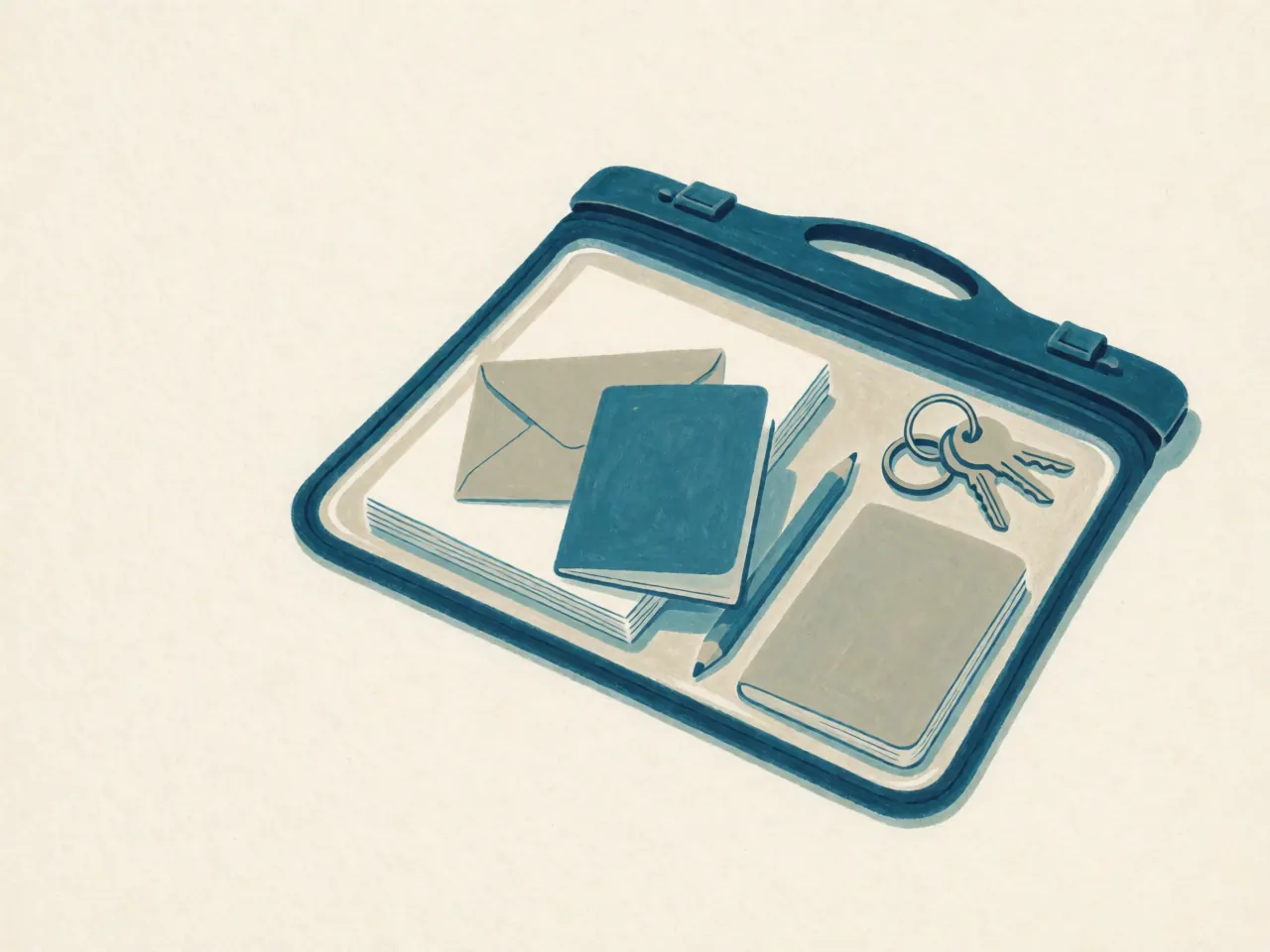
- Keep some cash in your kit, in small bills and coins.
- Keep a little cash in your wallet too, every day.
- Keep a spare set of house and car keys with your kit.
Cash still works during power failures and internet outages, when cards don’t.•
Over the coming months
A cash reserve
It may be hard to get cash from banks in an emergency. If you can, keep enough to cover your basic needs for a few weeks.•
- Keep it safe at home, in a safe or a lockbox, out of sight.
- Build it a little at a time. A few bills set aside each month adds up.
- If you avoid interest (riba), keep that in mind when you choose where emergency savings sit. Ask your imam or a scholar you trust if you’re unsure.
Know what deposit insurance covers
The Canada Deposit Insurance Corporation (CDIC) insures eligible deposits at its member institutions, up to $100,000 per category, including interest. Each category counts separately.•
Keep offline records
- Write down your account numbers, and your bank’s and insurer’s phone numbers, so you can call even if you can’t log in.
- Keep the list somewhere safe, with your originals and out of sight.
- Memorize what you can, such as your bank’s phone number.
- Never write PINs or passwords on it.
A home inventory
Keep a home inventory, so nothing is left out if you need to make a claim.•
- Photograph or film your most valuable possessions.
- Keep receipts, warranties and manuals for them, as proof of ownership.
- Store it away from home, or in a secure online option.
- Review it every year, and when you buy something new.
A walk through each room with your phone is enough to start.
If papers are lost or destroyed
Your copies give you the numbers and details you’ll need to replace them. Passports and immigration papers are federal. In Ontario, the rest go through ServiceOntario.
For the long term
Spread what you hold
Networks, software and banks can fail without warning. In July 2022, a network outage knocked out Interac debit payments across Canada.• When what you hold is spread out, one disruption doesn’t leave you stranded:
- Spread savings across more than one institution, each within what deposit insurance covers.
- Keep a cash reserve at home as well as in the bank.
- Keep more than one way to pay: a debit card, a credit card and cash.
- Gold or silver is an offline store of value, with trade-offs: prices can fall, metal at home can be lost or stolen, and dealers charge fees.•
The workbook goes deeper.
Do this now
You don’t need a safe full of papers to begin. Start with copies of your IDs, and some cash on hand for emergencies.
Sources (16)
- Emergency kit checklist, Government of Canada
- Emergency kits, Government of Canada
- Dam failures, Government of Ontario
- Essential items for an emergency kit, Canadian Red Cross
- Good money and your central bank, Bank of Canada
- What’s covered, Canada Deposit Insurance Corporation
- About CIPF coverage, Canadian Investor Protection Fund
- Protect your Social Insurance Number, Government of Canada
- Emergency preparedness, Insurance Bureau of Canada
- Lost, stolen, inaccessible, damaged or found passports and other travel documents, Government of Canada
- How do I replace an immigration document that has been lost, stolen or destroyed?, Government of Canada
- Replace, cancel or change information on your health card, Government of Ontario
- Replace a lost, stolen or damaged driver’s licence, Government of Ontario
- Get or replace an Ontario birth certificate, Government of Ontario
- Statement by Ian Scott, Chairperson and CEO of the CRTC, regarding Rogers’ outage, CRTC
- 4 tips to know before buying physical precious metals, FINRA